















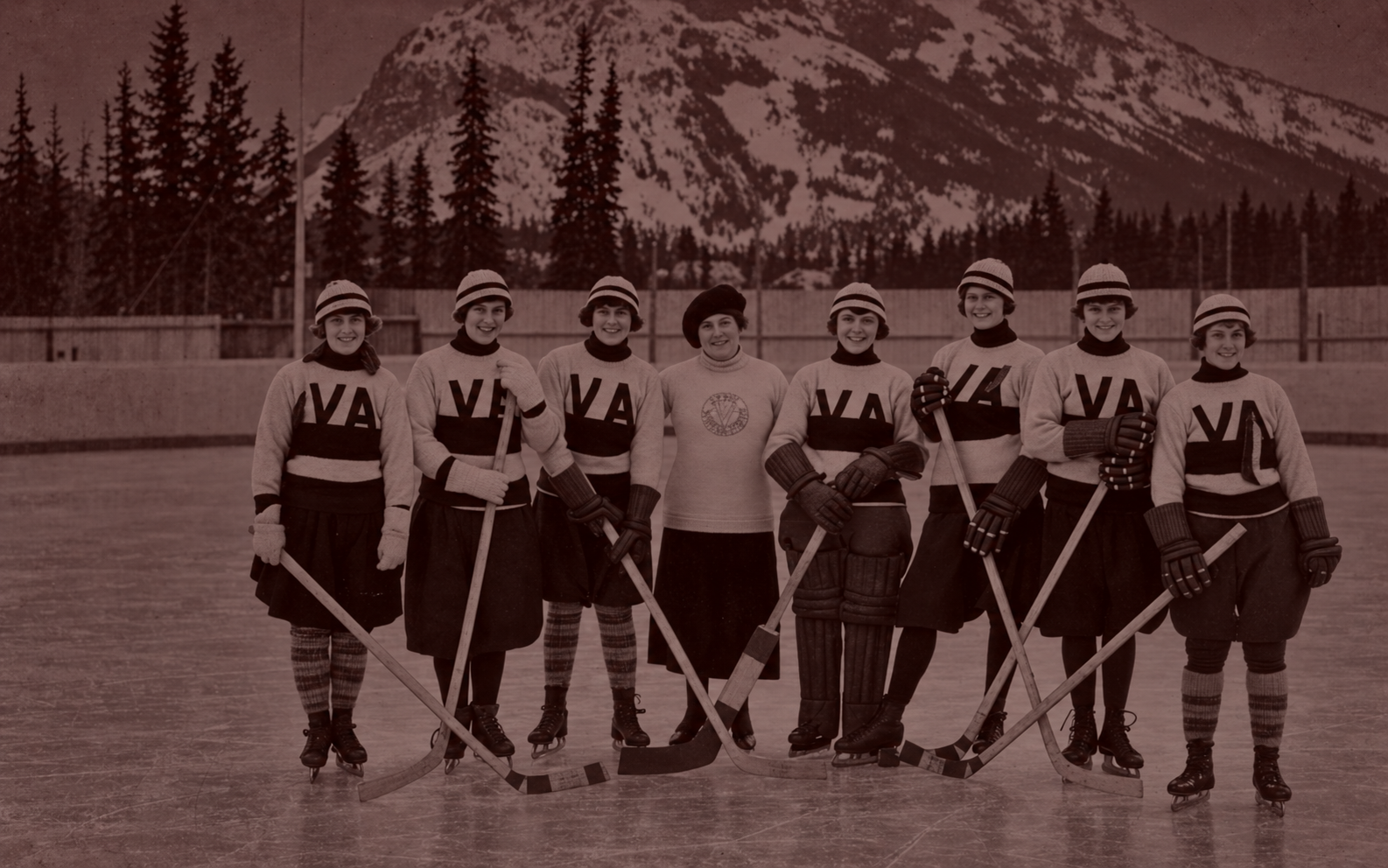


Women’s professional hockey did not arrive fully formed in 2024. The PWHL inherited decades of international competition, leagues that came and went, and players who insisted the work deserved a contract. The record is less tidy than a straight line from empty rinks to sold-out arenas.
Here is the version worth keeping close: the dates, the pay, the crowds and the people who made the next season possible.
International hockey gave elite women a stage before club hockey offered a living.
Manon Rhéaume played goal for the Tampa Bay Lightning in an NHL preseason game.
NHL preseasonWomen's hockey joined the Olympics. The United States beat Canada for the first gold.
Gold: USAA national women's league formed in Canada, years before anyone talked about salaries.
Wage: $0The Western Women's Hockey League gave players in the West a top-level option.
LeagueOn the world stage
International tournaments gave elite women a stage long before North American club hockey offered a stable living. Women’s hockey entered the Olympics at Nagano in 1998, where the United States beat Canada for gold. The two countries have met in seven of the eight Olympic gold-medal games through Milano Cortina 2026. Turin 2006 was the exception.
At Milano Cortina, the United States took its third gold. Canada finished with silver and Switzerland beat Sweden in overtime for bronze. The medal table tells a story of a fierce rivalry, but it also shows how much room the sport has to grow beyond it.
Medals by Games
| Games | Gold | Silver | Bronze |
|---|---|---|---|
| 1998 | USA | Canada | Finland |
| 2002 | Canada | USA | Sweden |
| 2006 | Canada | Sweden | USA |
| 2010 | Canada | USA | Finland |
| 2014 | Canada | USA | Switzerland |
| 2018 | USA | Canada | Finland |
| 2022 | Canada | USA | Finland |
| 2026 | USA | Canada | Switzerland |
Breaking into the men’s game
Some of the most visible doors opened outside women’s leagues. Manon Rhéaume appeared in goal for the Tampa Bay Lightning in an NHL preseason game. Hayley Wickenheiser played in Finland’s men’s professional system. Shannon Szabados joined the Columbus Cottonmouths of the SPHL. Kendall Coyne Schofield skated in the NHL All-Star Fastest Skater event. Their paths were different; each widened the public’s idea of where a woman could play.
Played in goal for the Tampa Bay Lightning in an NHL preseason game.
Played professional men's hockey in Finland with Kirkkonummi Salamat.
Joined the SPHL's Columbus Cottonmouths and played against men's professionals.
Competed in the NHL All-Star Fastest Skater event.
Leagues built the game, but not a living
The original National Women’s Hockey League began in 1999. The Western Women’s Hockey League followed in 2004 and the Canadian Women’s Hockey League in 2007. These were distinct organizations with overlapping seasons, not one continuous league under changing names.
For its first decade the CWHL offered no salary, only prize money. It introduced Canadian-dollar stipends in 2017, ranging from C$2,000 to C$10,000 annually. The newer NWHL opened in 2015 with U.S.-dollar salaries from US$10,000 to US$26,000. Midway into its second season, pay was cut; some players received as little as US$5,000. A paid contract existed, but its value could change while the season was underway.
Four years of leverage
When the CWHL closed in 2019, players faced another reset. The Professional Women’s Hockey Players Association formed that year, giving players a way to organize and stage showcase games while pushing for a sustainable professional league. The PWHPA was an association, not another league on the timeline.
The NWHL continued and was renamed the Premier Hockey Federation in 2021. By 2022–23, the PHF’s team salary cap was US$750,000. Dividing that cap by a roster of 20 to 25 players suggests roughly US$30,000 to US$37,500 per player, but that is arithmetic, not a guaranteed individual salary. It also leaves out how differently teams could distribute pay.
A contract before the first faceoff
The PWHL was founded in 2023 and began play in January 2024 with six teams. Its collective agreement was in place before the opening game. In 2023–24, the minimum salary was US$35,000 and each team had to reach a US$55,000 average. At least six players per team had to sign three-year contracts worth US$80,000 or more per year. The minimum protects an individual; the average is a requirement across a roster. They should not be mistaken for the same promise.
For 2026–27, the agreement raises the minimum to US$38,245 and the team average to US$60,100. The comparison with earlier leagues is not simply that the numbers are larger. It is that the terms were negotiated before players committed a season of their working lives.
The audience changed scale too. In 2013, the Women’s World Championship in Ottawa drew 18,013, a previous overall women’s hockey mark. The CWHL drew 5,938 to Montréal’s Bell Centre in 2016, then a North American regular-season professional record. These are different categories, and both matter. In the PWHL’s first season, Ottawa, Minnesota and Toronto set successive league milestones. Montréal drew 21,105 to the Bell Centre on April 20, 2024, setting the all-time women’s hockey attendance record.
The U.S. women’s hockey attendance record was broken four times during the 2025–26 season, ending with 18,006 at Madison Square Garden in April 2026. The milestone is not just one crowded night. It is a sequence of markets willing to fill larger buildings.
All attendance milestones
| Date | Event | Fans |
|---|---|---|
| 2013 | IIHF World Championship, Ottawa | 18,013 |
| 2016 | CWHL, Bell Centre | 5,938 |
| Jan 2 ’24 | PWHL, TD Place, Ottawa | 8,318 |
| Jan 6 ’24 | PWHL, Xcel Energy Center, Minnesota | 13,316 |
| Feb 16 ’24 | PWHL, Scotiabank Arena, Toronto | 19,285 |
| Apr 20 ’24 | PWHL, Bell Centre, Montréal | 21,105 |
U.S. records in 2025–26
| Date | Location | Fans |
|---|---|---|
| Nov 28, 2025 | Seattle | 16,014 |
| Jan 18, 2026 | Capital One Arena, Washington, D.C. | 17,228 |
| Feb 27, 2026 | Seattle | 17,335 |
| Apr 4, 2026 | Madison Square Garden, New York | 18,006 |
From six teams to twelve
Seattle and Vancouver joined for 2025–26, taking the PWHL from six clubs to eight. The league confirmed four more teams for 2026–27, bringing the total to twelve. That is an announced expansion, not a projection. The line on the chart is solid for a reason.
Expansion is still a test. More teams mean more jobs, more home dates and more chances for young players to see a professional future. They also demand arenas, travel, broadcast coverage and payroll that can hold up after the opening-night crowd goes home. Our expansion cover story takes a closer look at the new markets.
Teams by league and season
| Season | NWHL / PHF / PWHL | CWHL | Total |
|---|---|---|---|
| 2015–2016 | 4 | 5 | 9 |
| 2016–2017 | 4 | 5 | 9 |
| 2017–2018 | 4 | 7 | 11 |
| 2018–2019 | 5 | 6 | 11 |
| 2019–2020 | 5 | 0 | 5 |
| 2020–2021 | 6 | 0 | 6 |
| 2021–2022 | 6 | 0 | 6 |
| 2022–2023 | 7 | 0 | 7 |
| 2023–2024 | 6 | 0 | 6 |
| 2024–2025 | 6 | 0 | 6 |
| 2025–2026 | 8 | 0 | 8 |
| 2026–2027 | 12 | 0 | 12 |
What comes next
This history is not a story about waiting patiently for someone to notice. Players built leagues, organized when those leagues fell short, and negotiated terms for the next generation. The numbers make that history visible, but the work behind them belongs to the people who did it.
That is the story Her Ice will keep following. Thank you for reading.